 OMF Japan
Iris Café
OMF Japan describes Iris Café as a low-pressure space where people engage with faith far more naturally than they would stepping into a church. The bridge model — documented and working in Japan.
Read the OMF article →Saitama, Japan
Most people in Saitama have never stepped inside a church. A café lowers that first barrier — meeting people where they already are, alongside the faithful community already here.
Partner with us →

Basilea Community Solutions brings together a café operator, a pastoral team, and an oversight structure — and makes sure each one can do their job without carrying someone else's.
We build in role separation from day one — a dedicated café operator and a pastoral team each focused on what they do best. The café runs like a café. The church is led like a church.
Saitama is where this starts.
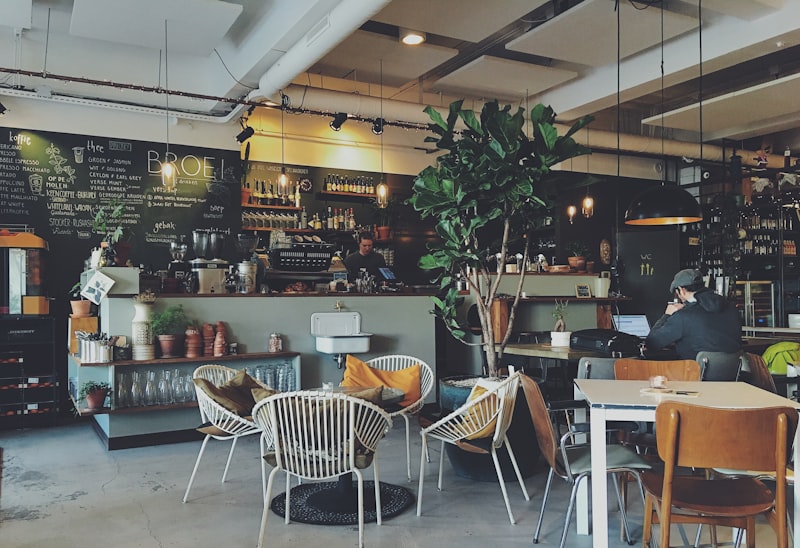
A real neighborhood café in Saitama — worth visiting for the coffee alone. Open to everyone: commuters, students, families, anyone who needs somewhere to sit.
Saitama is home to 1.3 million people, most with no religious connection and very few churches nearby. A café meets people where they already are.
Church gatherings happen in the same space after hours. But walk in any weekday and it's just a great café.
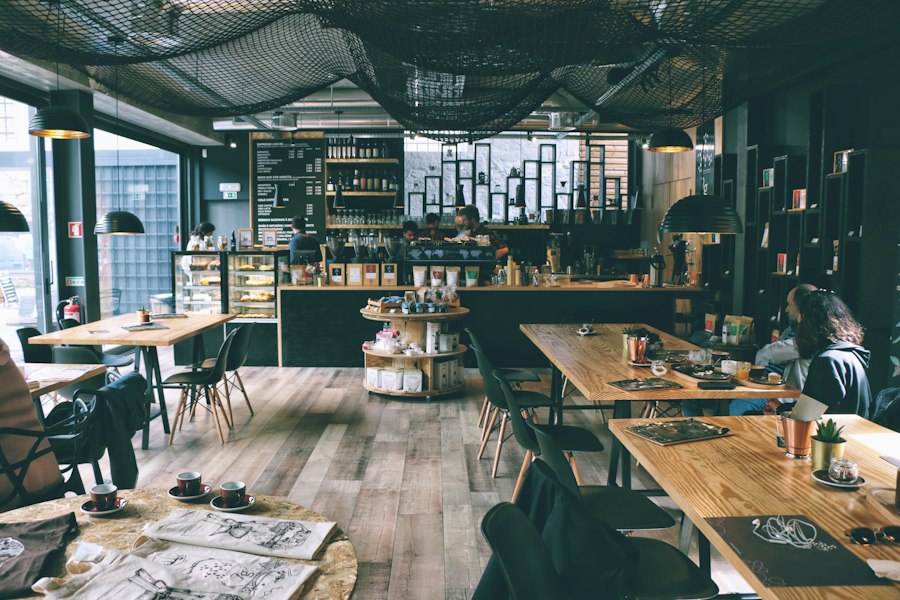
In Japan, walking into a church is a significant social act. Walking into a café isn't. OMF Japan describes café ministry as a non-intimidating space where people engage with faith far more naturally than they would in a church.[6]
This has worked before. A coffee shop in Sapporo, starting in 1971, led directly to a church plant within the United Church of Christ in Japan.[7]
A café doesn't replace a church. It makes the first step possible.
The average Japanese church has 35 members — faithful communities carrying real costs. Paying for a space that sits empty six days a week is a structural challenge.
A shared-space model changes that. The café runs five to six days a week and covers most of the lease. The church uses the same space and pays its share — documented as roughly a 6-to-1 split by actual use.[8]
The church doesn't fund the café. The café makes the space viable for both.
Running a café is a full-time job. Leading a church is a full-time job. The goal is to protect both — and that means dedicated support for each role.
Exponential documented this clearly: café operations need their own dedicated support to sustain well.[8]
The pastor preaches, disciples, and cares for people.
The operator runs the café with independent support.
Both do their actual job. From day one.
These are documented conditions — not assumptions. Every claim below is cited and linked.

OMF Japan calls café ministry a "comfortable, low-pressure bridge" where people engage more naturally than in a church.[6] Japan also consumes over 400,000 metric tons of coffee a year — coffee shops are already where people spend real time.[9][10] The café meets people in a space they already trust.
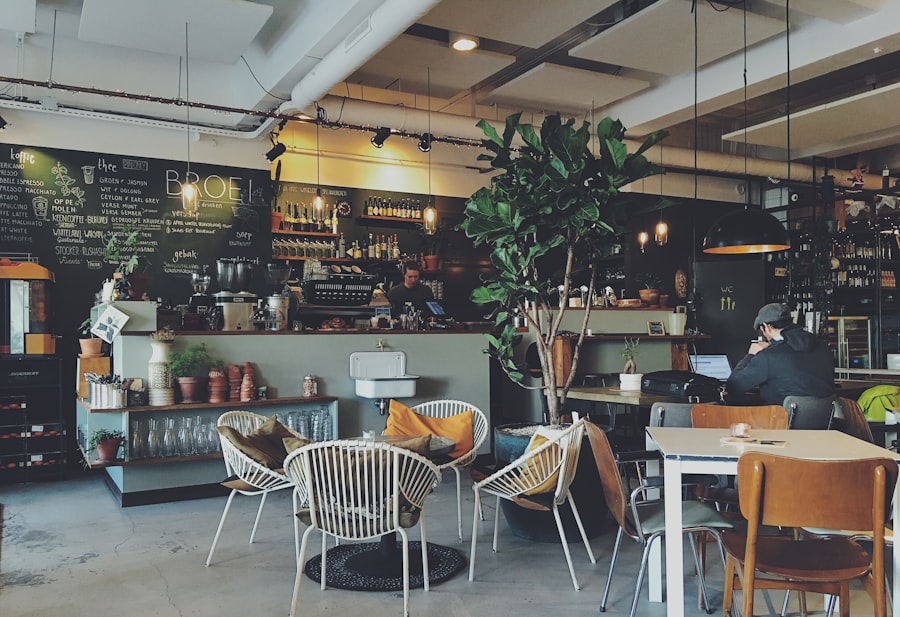
Most churches show up once a week. This one shows up every day.
A café open five days a week builds something a Sunday service alone can't — familiarity, trust, and a reason to keep coming back. The barista knows your name. The corner table feels like yours. The space already belongs to you before anyone has asked you to believe anything.
When the church gathers in that same room, the regulars already know it. The first-time barrier — the one that keeps most people in Japan from ever walking through a church door — is already gone. Not because of a program. Because they already belong to the space.
That's what the shared space creates. Not just a cheaper lease. A church woven into everyday life — present in the neighborhood five days a week, trusted before it's understood, and growing because of it.
Not endorsements — documented cases. Linked so you can read them yourself.
OMF Japan
OMF Japan describes Iris Café as a low-pressure space where people engage with faith far more naturally than they would stepping into a church. The bridge model — documented and working in Japan.
Read the OMF article → UCCJ — Sapporo
A Sapporo coffee shop that opened in 1971 as an outreach space. People dropped in, connected gradually, and a church grew from it — now part of the United Church of Christ in Japan.
Read the UCCJ account → Exponential
Exponential laid out the lease model, the cost split, and — critically — why one person can't do both jobs. Honest about what goes wrong. Worth reading before you start.
Read the Exponential piece →We'll be clear about where your support goes and how it's used.
Monthly giving covers rent, utilities, staffing, and programs. Recurring gifts — even small ones — let us plan and commit. One-time gifts help too.
Give MonthlyOperations, design, languages, teaching, community work. If you have something specific to offer, tell us what it is.
Get in TouchChurch, mission organization, or foundation? If you're evaluating this model or want to support it in Saitama, we'd like a real conversation — not a pitch.
Partnership InquiryMonthly updates on what's working, what isn't, and what's next. No pitch. Just honest progress.
SubscribeQuestions, partnerships, volunteer interest, or media — use the form or email us directly.
Email: hello@cafe4christ.org